![English [GB]](../../../../../language/en_GB/en_GB.jpg "English [GB]")
![English [US]](../../../../../language/en_US/en_US.jpg "English [US]")
![Nederlands [NL]](../../../../../language/nl_NL/nl_NL.jpg "Nederlands [NL]")
Home » Albums Focus stacked + Lac du Mont d'Orge
)
)
)
)
)
)
)
)
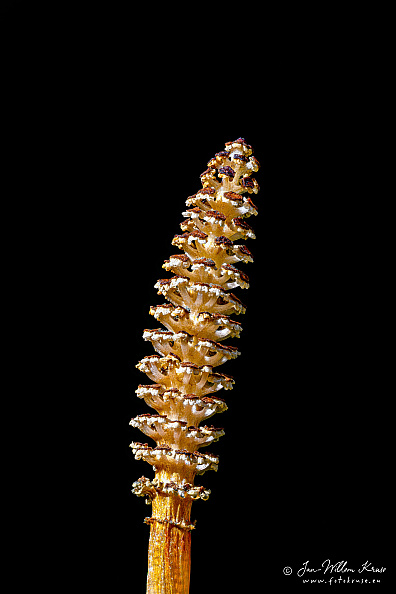
Common horsetail (Equisetum arvense), in Dutch: heermoes.
Camera brand and type used to take photo
 NIKON Z 9
Lens used
NIKON Z 9
Lens used
 Lens info unknown
NIKON Z 9
Lens used
Lens info unknown
Aperture used
 f/8.0
Exposure used
f/8.0
Exposure used
 1/80 s
Exposure compensation applied
1/80 s
Exposure compensation applied
 0.0 EV
ISO used
0.0 EV
ISO used
 64
64
f/8.0
Exposure used
1/80 s
Exposure compensation applied
0.0 EV
ISO used
64
Photo Info
_2025-04-27-23.36.53 ZS PMax.jpg
1667*2500
(710 KB)
1426x visited
Description
Headline
Common horsetail (Equisetum arvense), in Dutch: heermoes.
Caption
Field horsetail or common horsetail is a nonflowering plant, multiplying through spores. The common name "common horsetail" references the appearance of the plant that when bunched together appears similar to a horse's tail. Some other common names include "horse pipes", "bottle-brush", "snake-grass", "devil's-guts", "horsetail fern", "pine-grass", "meadow-pine", and "foxtail-rush".
The plant grows in a wide range of conditions, in temperatures less than 5 °C (41 °F) to greater than 20 °C (68 °F) and in areas that receive annual rainfall as low as 100 mm (3.9 in) and as great as 2,000 mm (79 in). It commonly occurs in damp and open woodlands, pastures, arable lands, roadsides, disturbed areas, and near the edge of streams. It prefers neutral or slightly basic clay loams that are sandy or silty, especially where the water table is high, though it can occur occasionally on slightly acid soils. It absorbs silicon (10) from the soil, which is rare among herbs. It has changed little from its ancestors of the Carboniferous period.
It has separate sterile non-reproductive and fertile spore-bearing stems which are produced in early spring and are non-photosynthetic, while the green sterile stems start to grow after the fertile stems have wilted and persist through the summer until the first autumn frosts. The rhizomes can pierce through the soil up to 6 feet (1.8 m) in depth. This allows this species to tolerate many conditions and is hard to get rid of even with the help of herbicides.
The plant is difficult to control due to its extensive rhizomes and deeply buried tubers. Fire, mowing, or slashing is ineffective at removing the plant as new stems quickly grow from the rhizomes. Some herbicides remove aerial growth but regrowth quickly occurs albeit with a reduction in frond density.
The plant is widespread in the northern hemisphere, growing as far as 83° North in North America and 71° North in Norway, Sweden, Finland, and Russia and as far south as Texas, India and Iran. It is less widespread in the southern hemisphere, but it occurs in Argentina, Brazil, Chile, Madagascar, Indonesia, Australia and New Zealand.
The plant grows in a wide range of conditions, in temperatures less than 5 °C (41 °F) to greater than 20 °C (68 °F) and in areas that receive annual rainfall as low as 100 mm (3.9 in) and as great as 2,000 mm (79 in). It commonly occurs in damp and open woodlands, pastures, arable lands, roadsides, disturbed areas, and near the edge of streams. It prefers neutral or slightly basic clay loams that are sandy or silty, especially where the water table is high, though it can occur occasionally on slightly acid soils. It absorbs silicon (10) from the soil, which is rare among herbs. It has changed little from its ancestors of the Carboniferous period.
It has separate sterile non-reproductive and fertile spore-bearing stems which are produced in early spring and are non-photosynthetic, while the green sterile stems start to grow after the fertile stems have wilted and persist through the summer until the first autumn frosts. The rhizomes can pierce through the soil up to 6 feet (1.8 m) in depth. This allows this species to tolerate many conditions and is hard to get rid of even with the help of herbicides.
The plant is difficult to control due to its extensive rhizomes and deeply buried tubers. Fire, mowing, or slashing is ineffective at removing the plant as new stems quickly grow from the rhizomes. Some herbicides remove aerial growth but regrowth quickly occurs albeit with a reduction in frond density.
The plant is widespread in the northern hemisphere, growing as far as 83° North in North America and 71° North in Norway, Sweden, Finland, and Russia and as far south as Texas, India and Iran. It is less widespread in the southern hemisphere, but it occurs in Argentina, Brazil, Chile, Madagascar, Indonesia, Australia and New Zealand.
Image Alt text
-
Event
-
Keywords
Capture info
(IPTC Instructions)
(IPTC Instructions)
-
Location
Location
- - - -
Altitude
-
Properties
Original filename
-
Taken on
-
Scanned on
### No CreateDate ###
Digital Source
Unknown
Posted first on
02-Jan-2026 20:32:34
Update posted on
24-Feb-2026 17:30:48
Rating/label
Adobe Lightroom
Adobe Lightroom
Label and rating as set in Adobe Lightroom
Rating score
no rating
Update rating
Rate this photo
Copyright
Credit line
-
Copyright
-
Copyright Notice
-
Photographer
Jan-Willem Kruse
Other Info
Related albums
Job identifier
-
0 comments